Fresh chiles and hot sauces: check the form before substituting
A fresh chile, a dried chile and a bottled hot sauce are different ingredients. Before substituting one for another, check what the original recipe expects the ingredient to do.
A fresh chile, a dried chile and a bottled hot sauce are different ingredients. Before substituting one for another, check what the original recipe expects the ingredient to do.
Identify the product
Read the name, form, ingredient list and preparation instructions. A sauce may contain salt, acid and other seasonings as well as chile. Adding it changes more than heat. A dried ingredient may need a separate preparation that does not apply to a fresh one.
Do not assign a fixed heat level from appearance alone or assume that two similarly named products will need the same amount. Follow relevant handling instructions and avoid touching your eyes after handling chiles.
Test a small portion
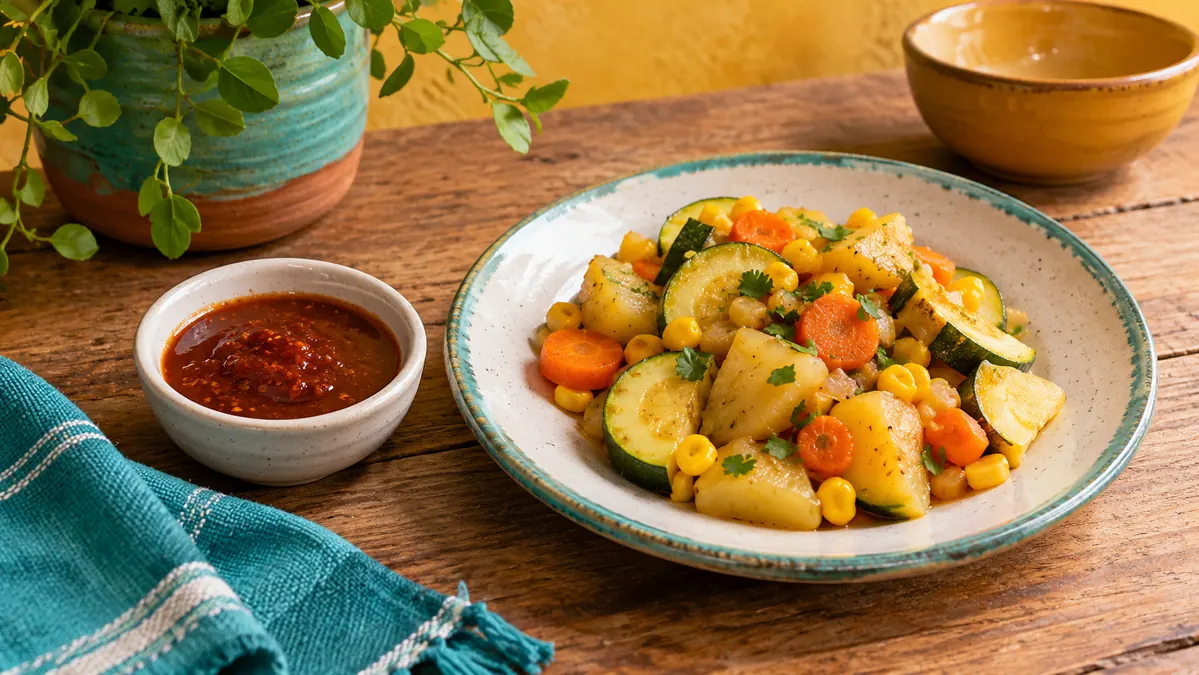
For the simple taco-table ideas on this blog, keep an optional hot sauce separate from the main filling. Try a small amount on an individual portion before mixing it into an entire batch. This also lets people choose whether to use it.
Describe substitutions honestly
Write down the exact product and the amount you added. If a substitution changes a named preparation substantially, present it as your adaptation. When repeating the dish, check the new product again rather than treating the previous measurement as universal.
Related reading
- Choosing tortillas: read the product before the recipe
- Black beans for tacos: start with clearly prepared beans
Cover illustration generated with AI.