How to adjust a homemade salsa a little at a time
A homemade salsa is easier to adjust in a small sample than in the entire serving bowl. First identify what seems out of balance: too much onion, excess liquid, insufficient seasoning or a…
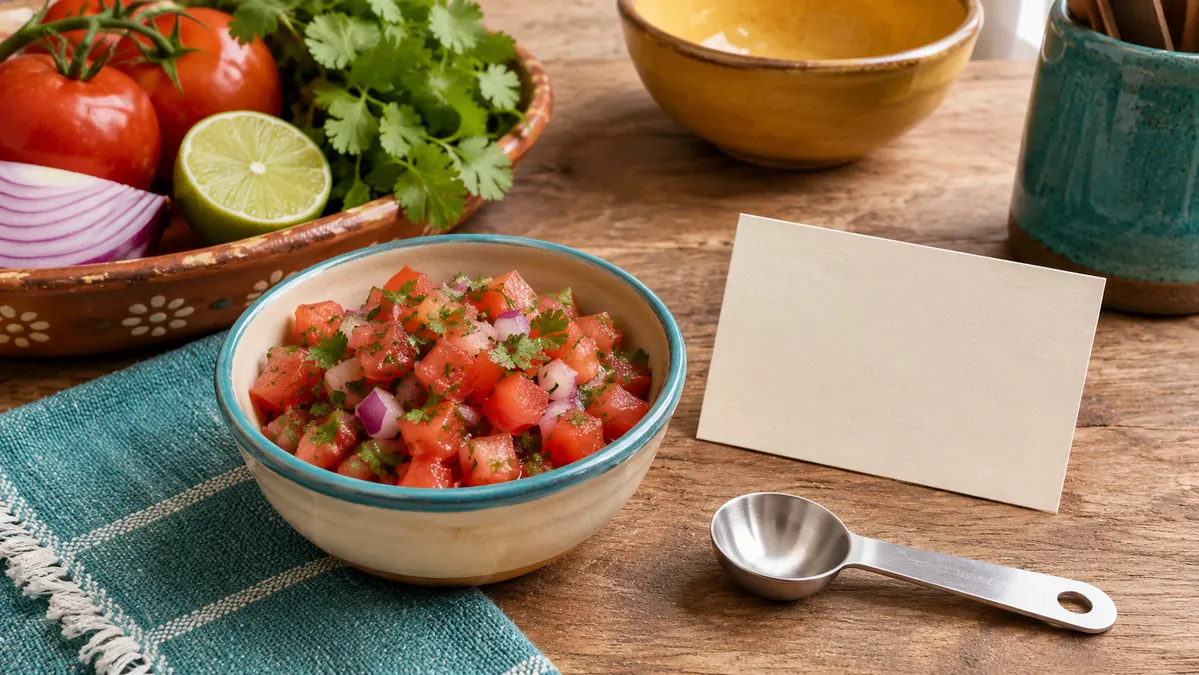
A homemade salsa is easier to adjust in a small sample than in the entire serving bowl. First identify what seems out of balance: too much onion, excess liquid, insufficient seasoning or a level of heat that does not suit the meal.
Check the base before adding more
For a fresh tomato mixture, observe the cut size and the proportion of tomato to onion. If one ingredient dominates, review that proportion before adding several new ingredients. If the tortilla becomes soaked, consider the liquid and serving quantity as well as the salsa itself.
Change one element
Take a small portion into a clean bowl. Add a little of the intended correction, mix and taste an appropriate sample. Keep a note of what you changed. Only apply the adjustment to the larger batch after checking the result.
Salt, lime and hot sauce do different jobs. Do not treat them as interchangeable solutions. A bottled sauce may already contain salt and acid, which should be considered before using it as an extra ingredient.
Match the salsa to the meal
Taste it with the filling and tortilla rather than only on its own. A strongly seasoned filling may need a different accompaniment from a mild bean filling. Keep chile optional when serving people with different preferences.
Related reading
- Cutting taco toppings for an easier-to-eat filling
- A quesadilla cooking sequence: base, filling and finish
Cover illustration generated with AI.